Good is the enemy of better
In this exhibition, I present primarily new forms made of steel. Steel is a material I grew up with. My father ran a company involved in the industrial production of steel machines. This entire industry, concentrated on Towarowa Street in Jasło, feels to me like a breath of emerging capitalism in Poland. When I think about that time, I see new housing blocks being built, steel cranes in the urban landscape, old prefab factories. I feel an atmosphere of hope and change that, as a child, I was only barely aware of. Goods from the West were flowing into Poland, the world was becoming colorful — we had pizza, Turbo chewing gum, Caro cigarettes and unfiltered Klubowe. This is how I now see the landscape of those years.
In my father’s view, steel was a solid, durable, and trustworthy material. It seems that the rest of society shared this opinion as well. According to him, steel serves a purpose — it fulfills a function. It has no aesthetic value, but it does have properties: load resistance, elasticity, shrinkage, melting temperature. In his opinion, steel should be powder-coated — it should not be left raw, as it undergoes slow degradation and loses its properties. What would steel be without these powerful qualities?
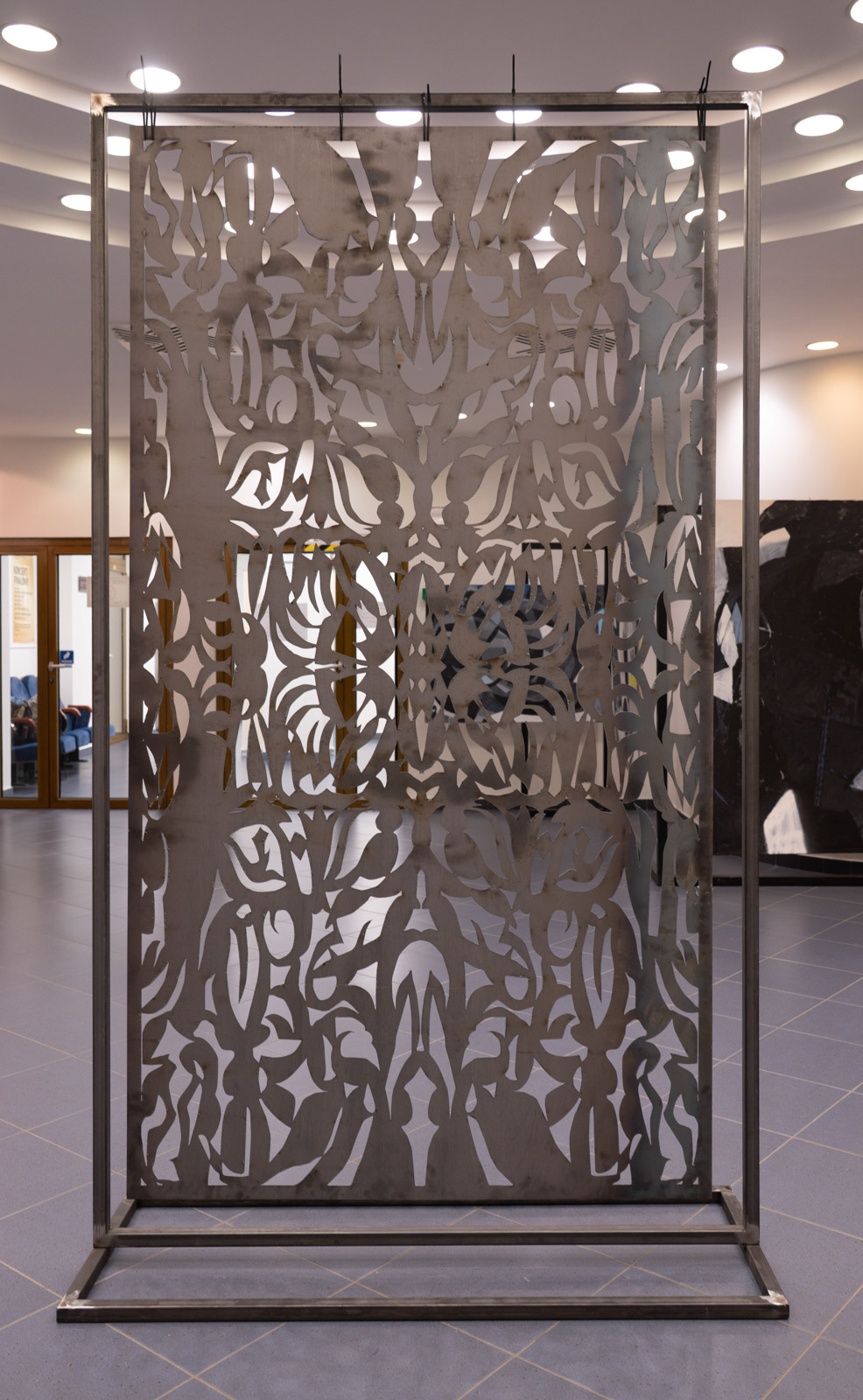
I see something else in steel. Steel — especially hot-rolled steel — is very painterly. The hot roller used in the production process leaves discolorations and subtle tonal reflections on its surface, somewhat resembling the refraction of light in oil stains. For me, steel has a spirit, an identity, an inner history. It changes over time, it can be easily scratched and processed, which makes it a very convenient carrier of experience and the memory of time.
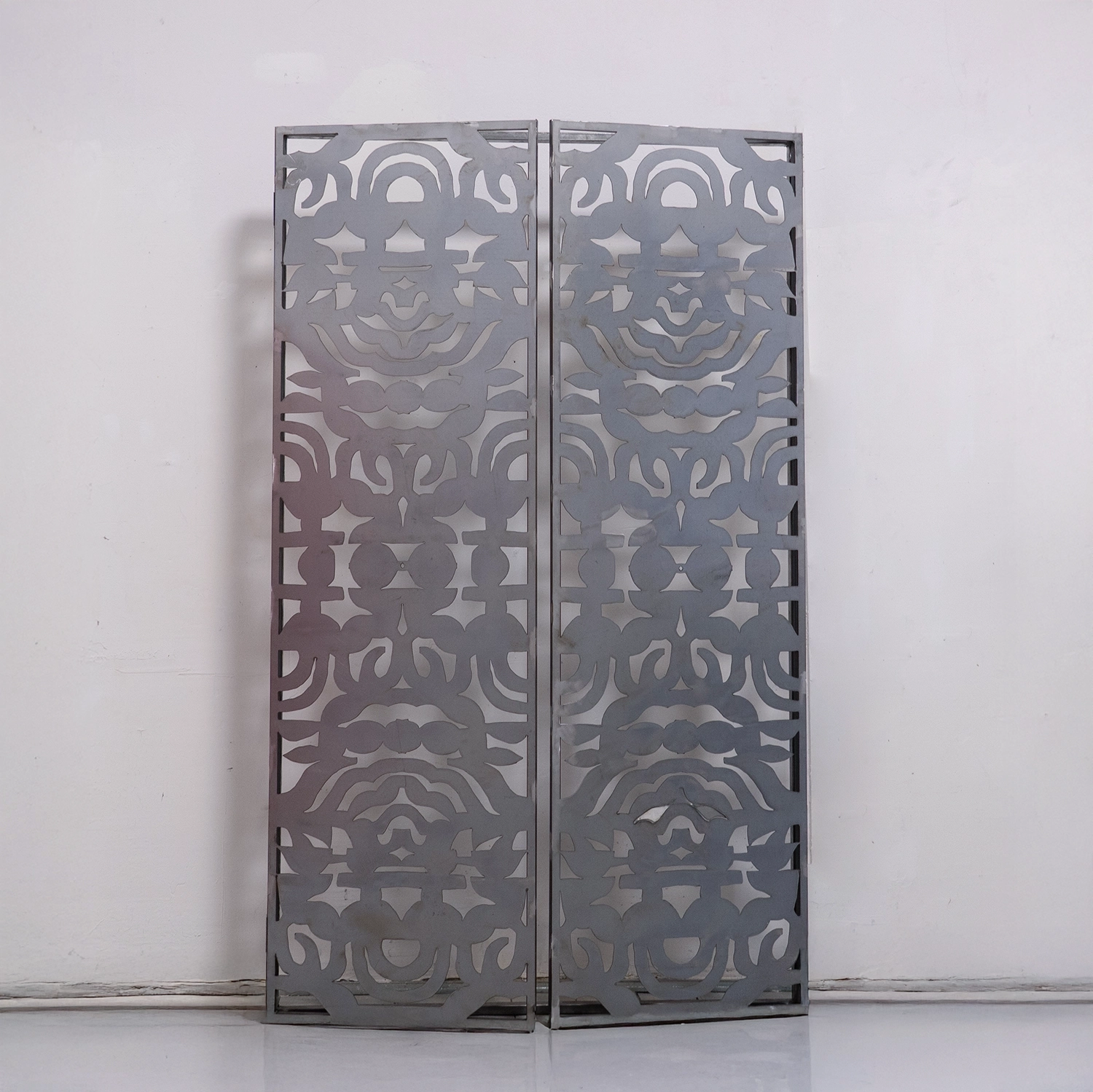
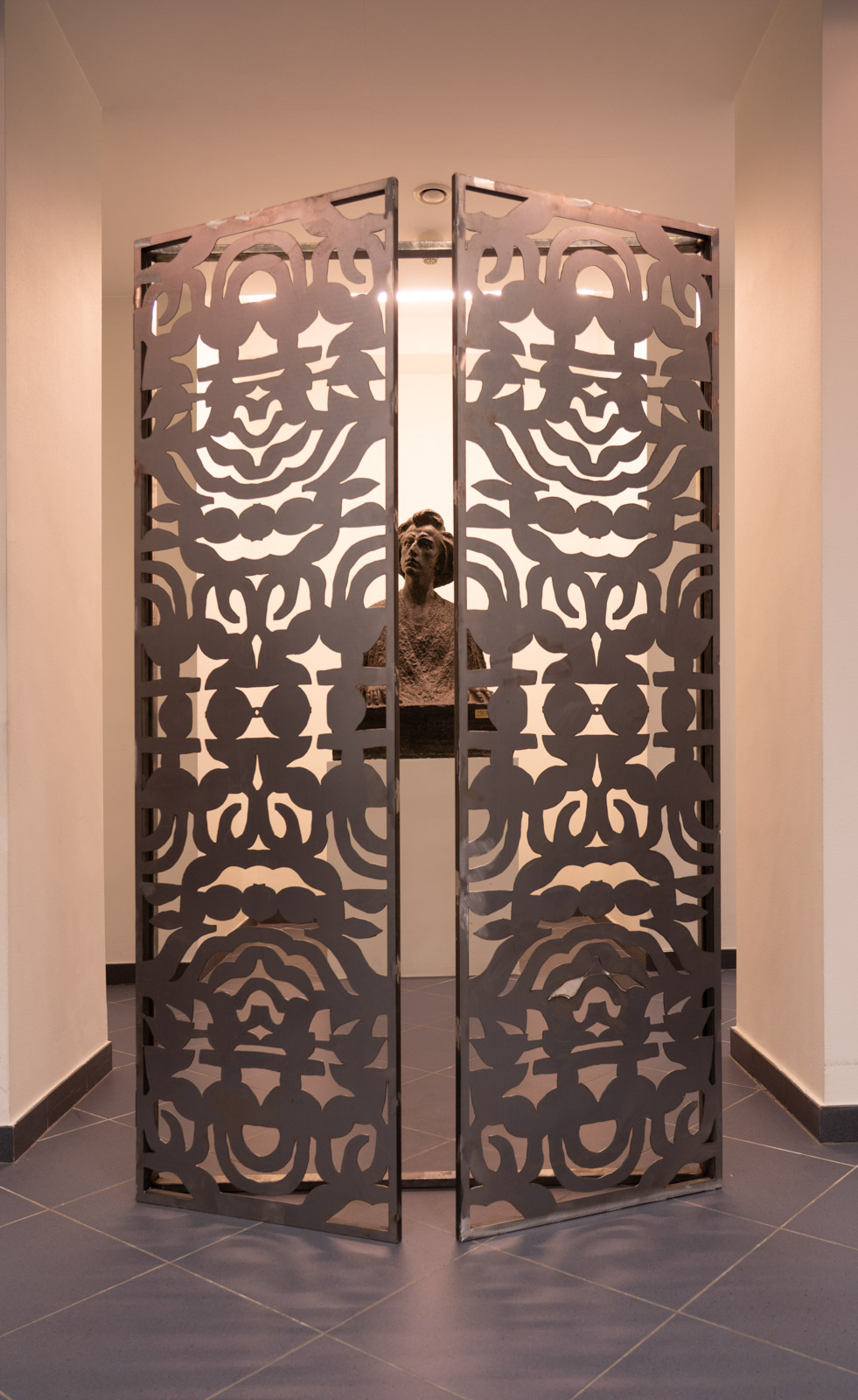
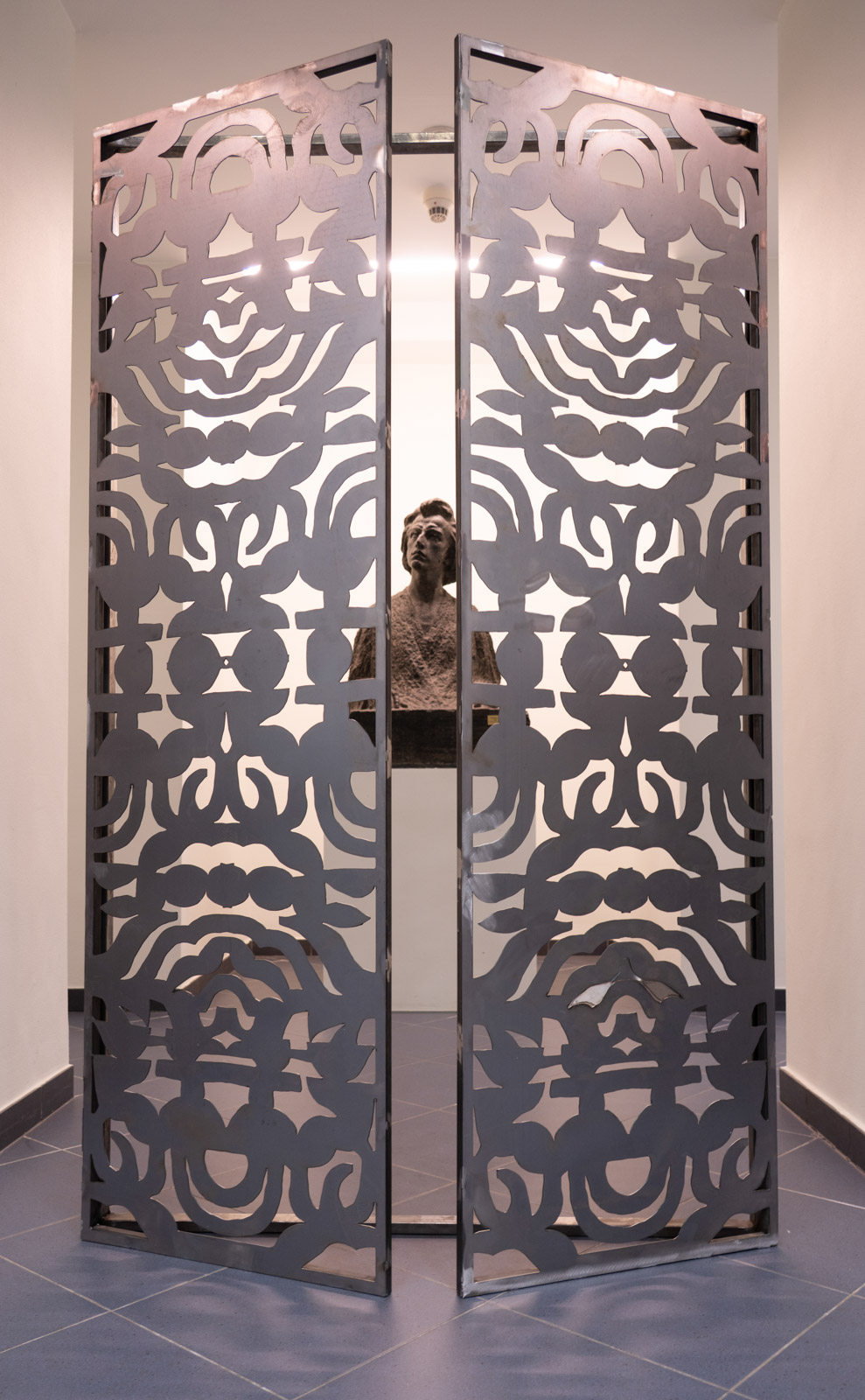
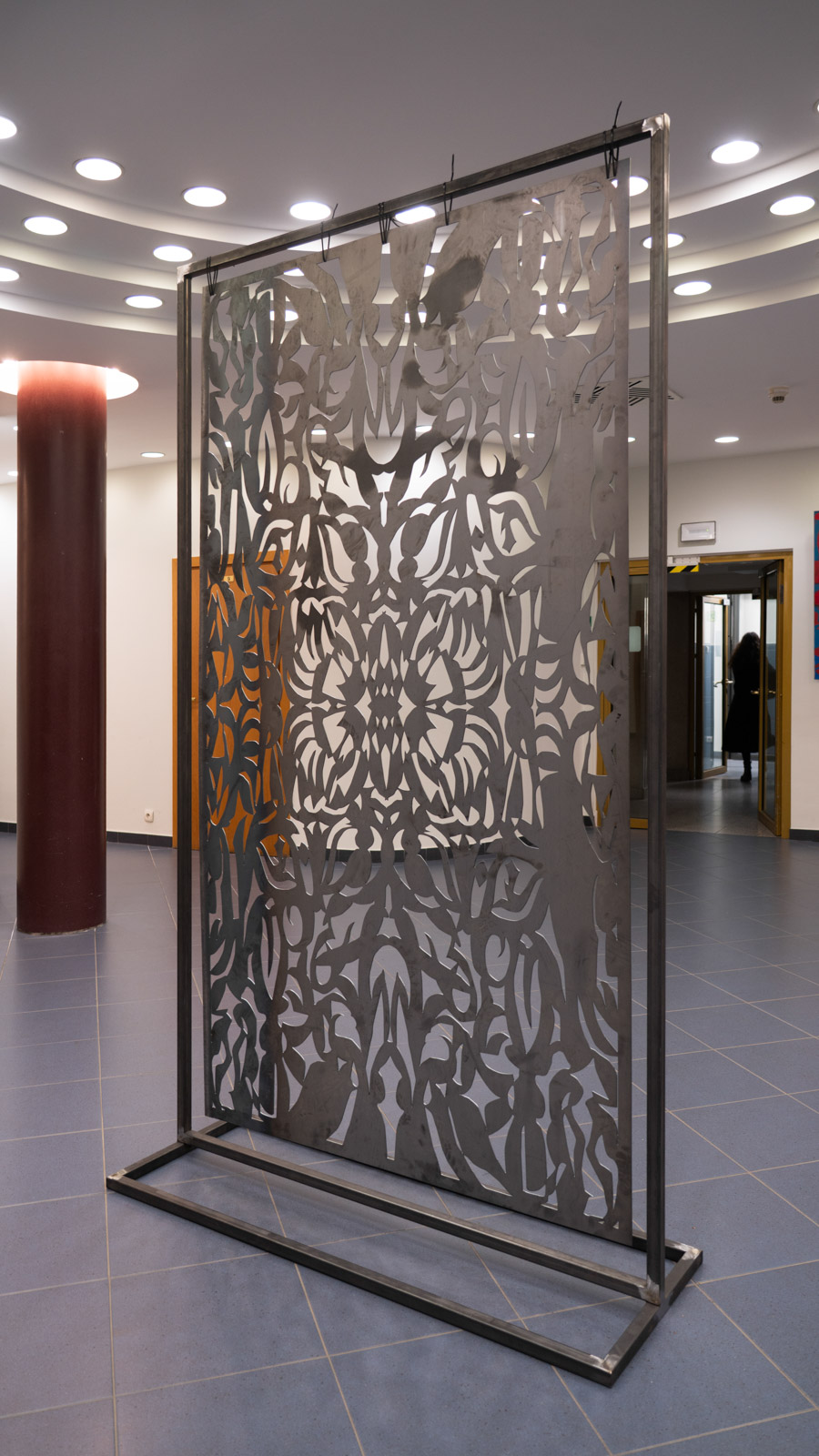
In the works presented, I juxtapose my hand-designed ornament — lace-like precision — with the brutal rawness of steel. This collision fascinates me and becomes a vehicle for telling personal stories about life.
And so, the work “Iron consequence” speaks about life choices — preferably the right ones — that lead to more and more doors, and this sequence and continuity of correct decisions is precisely the “iron consequence.”
The work “I always swing to hit” is a kind of swing-bar from my childhood, where we used to swing to the limit, hitting a steel bar of the railing. For me, this piece has both a symbolic character in the context of growing up, but it also serves as a current metaphor for my life, in which I always want to go higher and feel more; the specific nature of the ornament and its movement is also significant here.
“You don’t know nothing about sex” — a work additionally covered with a drawing carved using an angle grinder. I discovered a kind of meditation in drawing with a grinder — a rough and demanding activity that draws you in, fascinates, invites, and the ornaments or figures? Well, they are often an emanation of sex, created right after or during moments of fantasy.
These works open up a very characteristic and personal cycle for me, and metal becomes a material I will return to frequently.